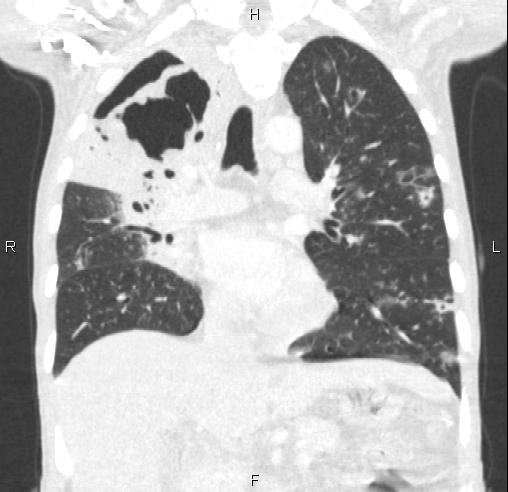
A previously healthy 15-year-old boy is admitted to the PICU with respiratory failure and seizures. Three weeks ago, while participating in a volunteer trip to rural Panama during the rainy season, he developed fevers and a worsening cough after helping clear muddy fields and dig post holes for a fence around a local school. He returned home 1 week ago with persistent cough and intermittent fevers. On the morning of admission, he developed a generalized tonic-clonic seizure.
He reports taking atovaquone-proguanil as recommended, as well as soaking all his clothing in 0.5% permethrin and used 30% DEET-based insect repellant every day. He received yellow fever and typhoid vaccines prior to travel. Parents state that he was not allowed to swim, drink alcohol, ride on a motorcycle, or interact with animals other than riding domesticated horses during his trip.
In the emergency department, he was febrile to 39°C, tachycardic, hypotensive, and hypoxemic with oxygen saturation of 85% on room air. Chest x-ray showed a large right sided pneumonia with possible effusions, so a CT chest was obtained with representative image below.
Despite broad-spectrum antibiotics, IV fluids, and supplemental oxygen, he developed a second prolonged seizure requiring benzodiazepine treatment and progressive hypoxemic respiratory failure requiring intubation. Laboratory evaluation showed leukocytosis, thrombocytosis, and markedly elevated inflammatory markers. MRI head with contrast is obtained with notable images from DWI and FLAIR sequences below.
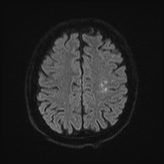
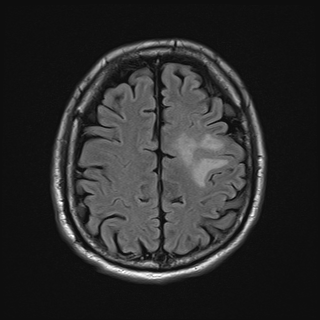
Images obtained from radiopaedia.org
<aside>
A) Meropenem
B) Artesunate
C) Doxycycline
D) Piperacillin-tazobactam
E) Rifampin
</aside>